


In 2025, 32 people died in the custody of Immigration and Customs Enforcement (ICE), which is more than it has ever been in two decades, according to The Guardian.
Ranging from small children to people searching for asylum, they were taken far too quickly from this world.
The murder of Renée Good brought the United States citizens’ attention to the problem of ICE taking people without proper warrants.
When she was in her car blocking ICE agents, they told her to move, and when she went to move, ICE agents followed her and shot her three times.
People in the Trump administration have said that she tried to run over the agents when there is footage of the wheels of the car pointing to the right side, which proves that their statement is inaccurate.
Repeating the same story with protesters
Situations like this one haven’t stopped with her death; another man was killed on January 24, 2026, Alex Pretti.
While attending a protest in Minneapolis, two women were being pushed by ICE agents and pepper-sprayed.
Pretti was just trying to help them when the ICE agents started attacking him and firing shots at him, which killed him.
Fear, profiling, and public resistance
Recently, the media has seen all types of ICE agents intimidating and harassing people that don’t “look American”, which is racial profiling, according to The Guardian.
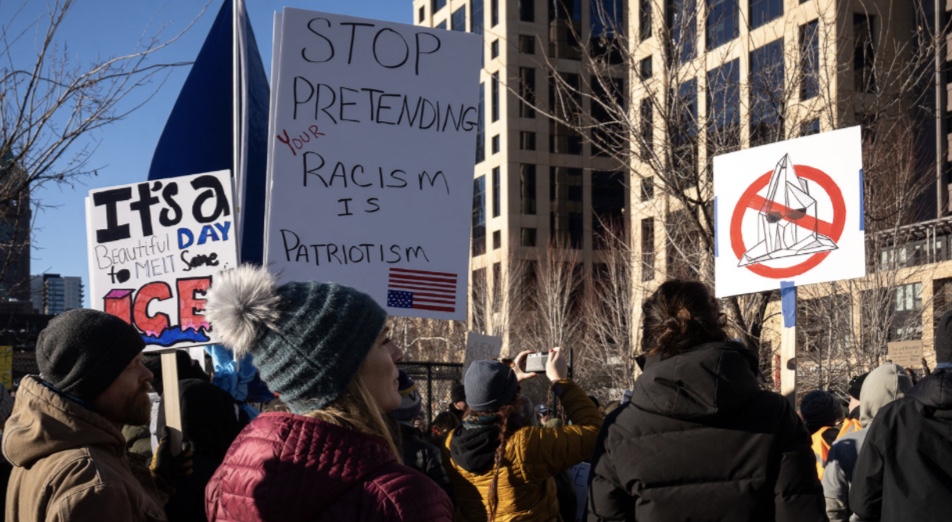
Those attacks have brought out protesters and communities together to defend the rights of immigrants.
Immigrants are humans
Immigrants are just like U.S. citizens, we are all human beings searching for a better life, and the “American Dream”, which everyday seems more and more unrealistic.
People used to think of the United States as the best place to live, so people sought that, and now fear lingers in the streets.
Echoes of a troubling past
Fear of being arrested just because of appearance is alarming, and it brings memories of historical events.
We need to learn from the past and do something before people start getting round up without reason, before it gets too far.
Moreover, the consequences of ICE’s aggressive tactics extend far beyond the individuals detained.
The defenders of ICE
While the people defending ICE’s actions talk about getting rid of illegals because they bring crime to our country, there needs to be a more humane approach.
Families are torn apart, children are left without parents, and entire communities are plunged into sorrow and uncertainty.
Immigrant families, who might have once contributed positively to their communities, now live in isolation, stifling the cultural richness they offer.
Acting in the right side of history
It is critical that we recognize this ripple effect and work toward healing the wounds inflicted by such policies.
On a broader scale, these issues raise fundamental questions about American identity and values.
What does it mean to be a country that stands for liberty and justice for all, yet allows such inhumane practices to keep happening?
We must urge lawmakers to advocate for humane policies that recognize the contributions of immigrants, ensuring that the system prioritizes compassion over fear.
Immigrants were just looking for a better life from what they left and instead of welcoming new cultures we are sabotaging them.